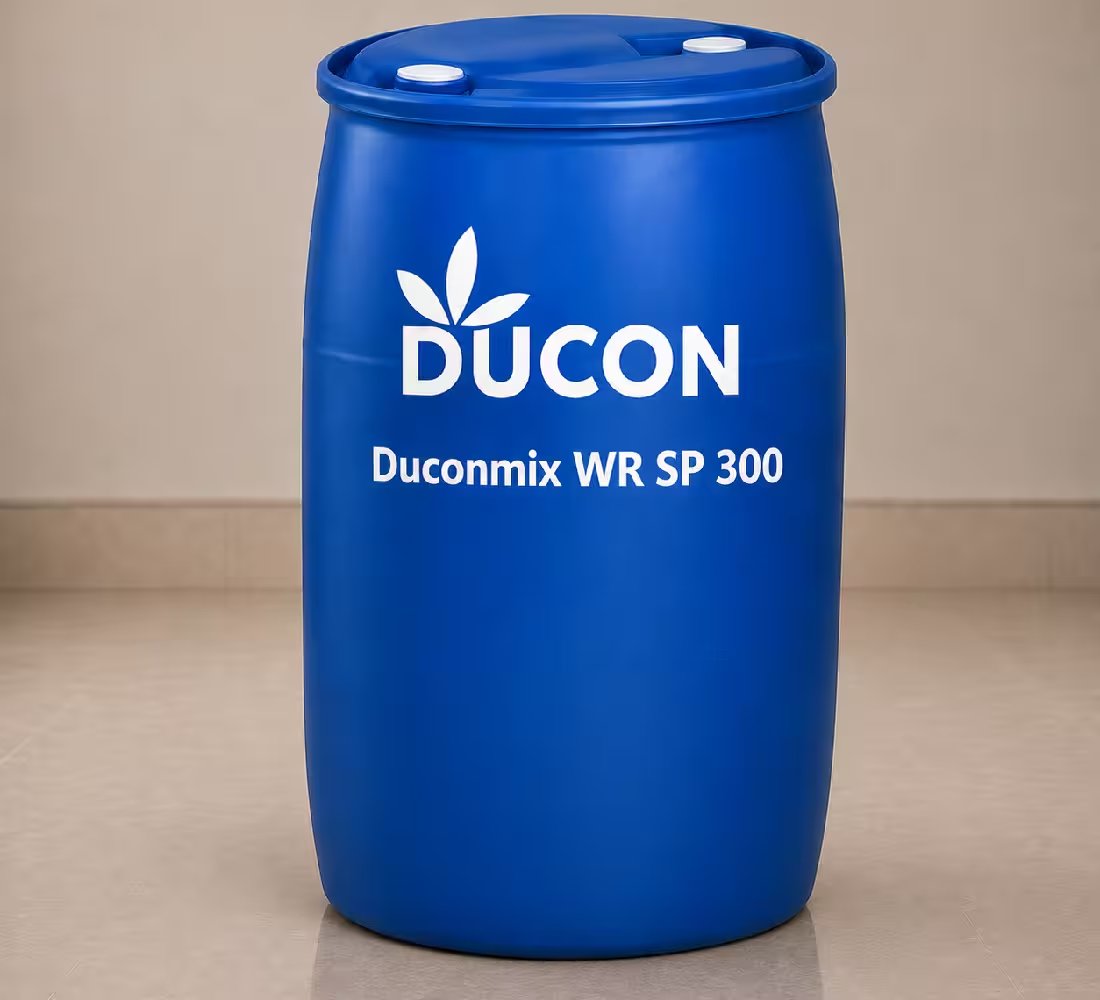
Duconmix WR SP 300

High Range Water Reducing Superplasticizer

Manufactured by Ducon Construction Chemicals Industries Ltd at our Gazipur facility, Duconmix WR SP 300 is a chloride-free high range water reducing superplasticizer built on advanced polycarboxylate ether technology. It removes up to 35% of the mixing water at the workability your crew actually needs, which is what allows a genuinely low water/binder ratio without a stiff, unplaceable mix. Manufactured to ASTM C494 Type F, EN 934-2 and IS 9103, it is specified for precast production, rheoplastic and self-compacting concrete, and high-performance structural work across Bangladesh.

Pack Size:

5 kg, 10 kg, 20 kg and 250 kg

Consumption:

0.3% to 1.5% by weight of cement
Duconmix WR SP 300-High Range Water Reducing Superplasticizer
Ducon Tile Adhesive
sqr012-col2

What is Duconmix WR SP 300?

Every concrete mix in Bangladesh is settled by an argument on site. The design says one water-cement ratio; the crew placing the concrete wants something that will actually move through the shutters and around the steel. Somebody adds a bucket of water, the pour goes smoothly, and three weeks later the cubes come back below grade. Nobody records the bucket, so the failure gets blamed on the cement, the sand, or the weather.

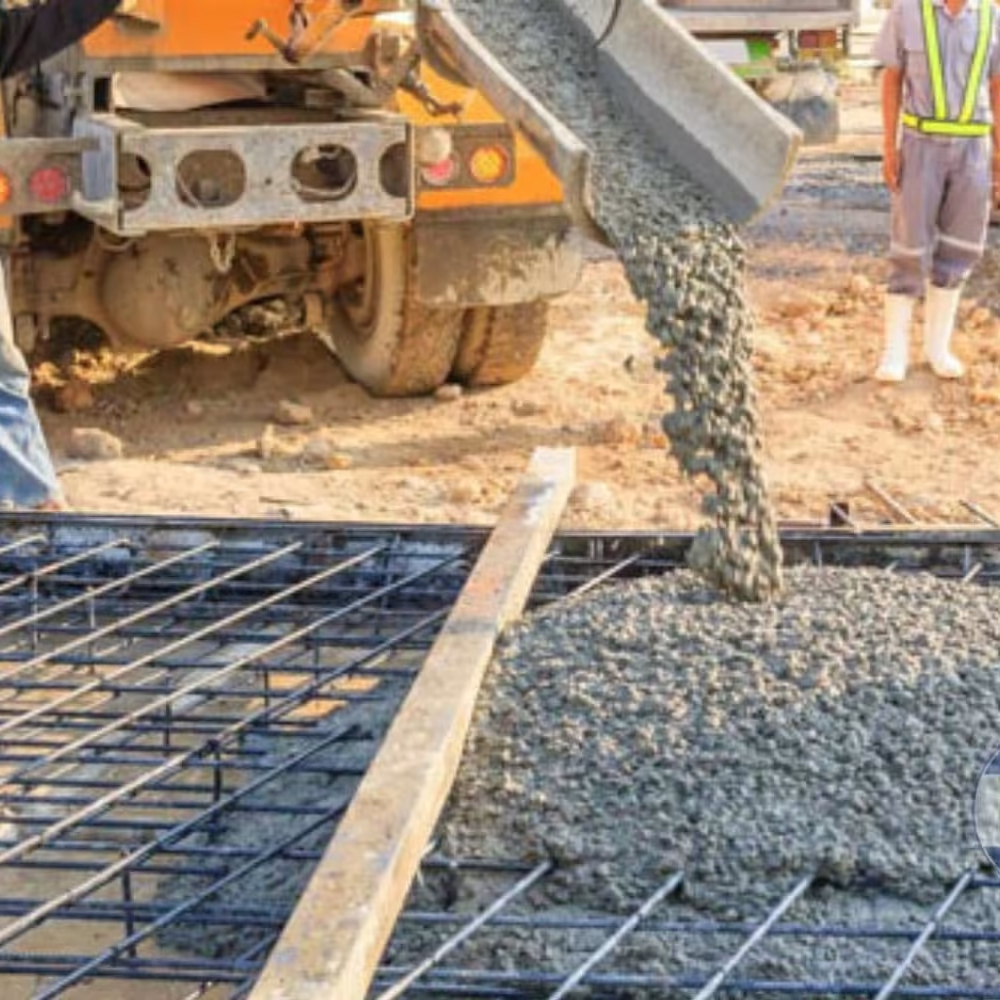
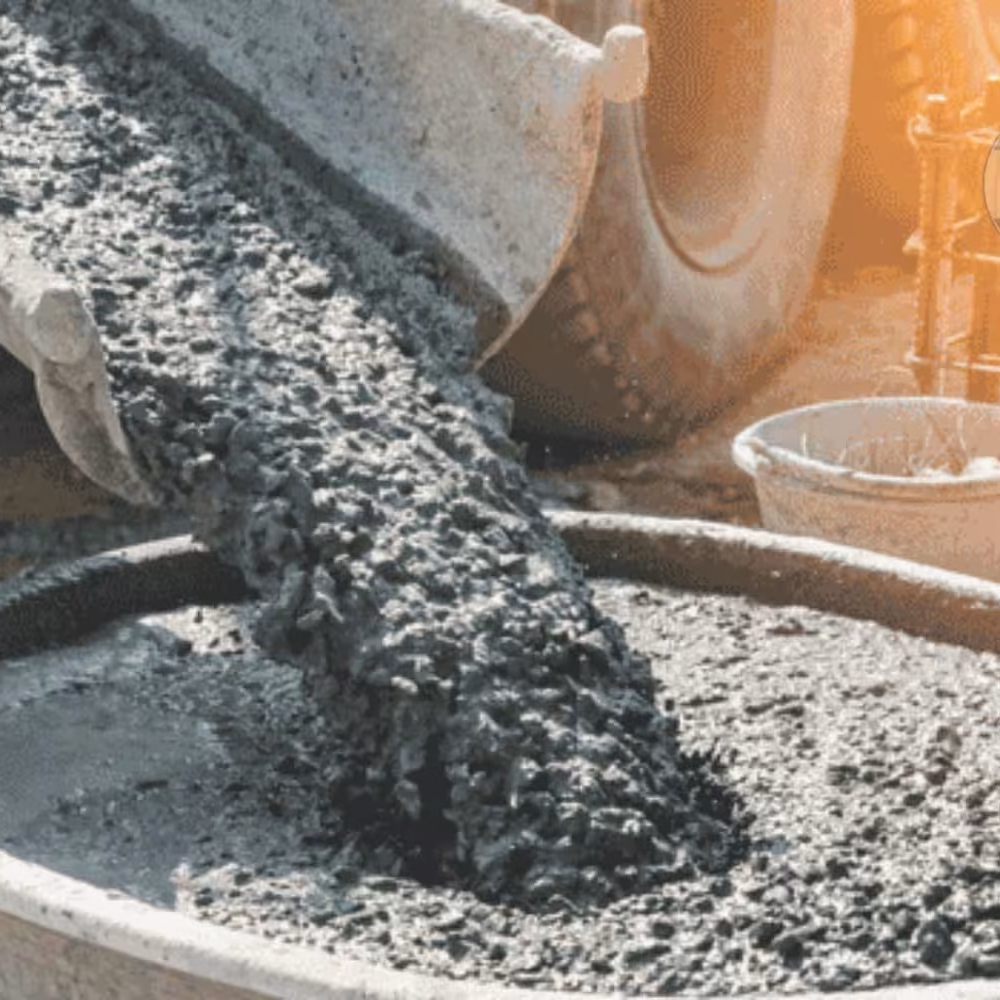
Duconmix WR SP 300 is designed to end that argument rather than win it. Specified as a low water binder ratio admixture, it works by dispersing cement particles that would otherwise clump together and trap water between them. Freeing that trapped water means the same mix flows at a far lower water content, so the crew gets the placeability they were asking for and the engineer keeps the water/binder ratio the design depends on. The TDS figure is up to 35% water reduction, and that number is the whole product: everything else it does, from early strength to surface finish to durability, follows from taking water out of the mix.

Water-reducing Concrete admixture
sqr012-col2
Ducon Tile Adhesive

Application Process

1. Dosing:

Dispense Duconmix WR SP 300 at 0.3% to 1.5% by weight of cement, which works out to roughly 150 g to 750 g per 50 kg bag. Establish the working figure inside that band through a laboratory or site trial mix rather than assuming a fixed rate, because cement source, aggregate grading, fines content and ambient temperature all shift the response.

2. Timing:

Add the admixture together with the mixing water, introducing it once approximately 50% to 70% of that water is already in the batch. This single detail accounts for most of the inconsistent results we are asked to investigate.

3. Mixing:

Continue mixing for a minimum of 60 seconds after the admixture is added, so the polymer is uniformly dispersed and the mix is homogeneous. Check slump or flow against your approved trial mix before the load is released. PCE admixtures typically show their full effect slightly after dosing, so judging workability too early can tempt an operator into an unnecessary top-up.

4. Water-cement ratio:

Take the benefit as water reduction, not as extra slump. This is the decision that determines whether the product does anything for you. If the saving is released as workability, you get an easier pour and no strength gain. If the water is held back, the lower water/binder ratio produces a denser matrix that tests higher at every age and is markedly less permeable.

5. Placing and curing:

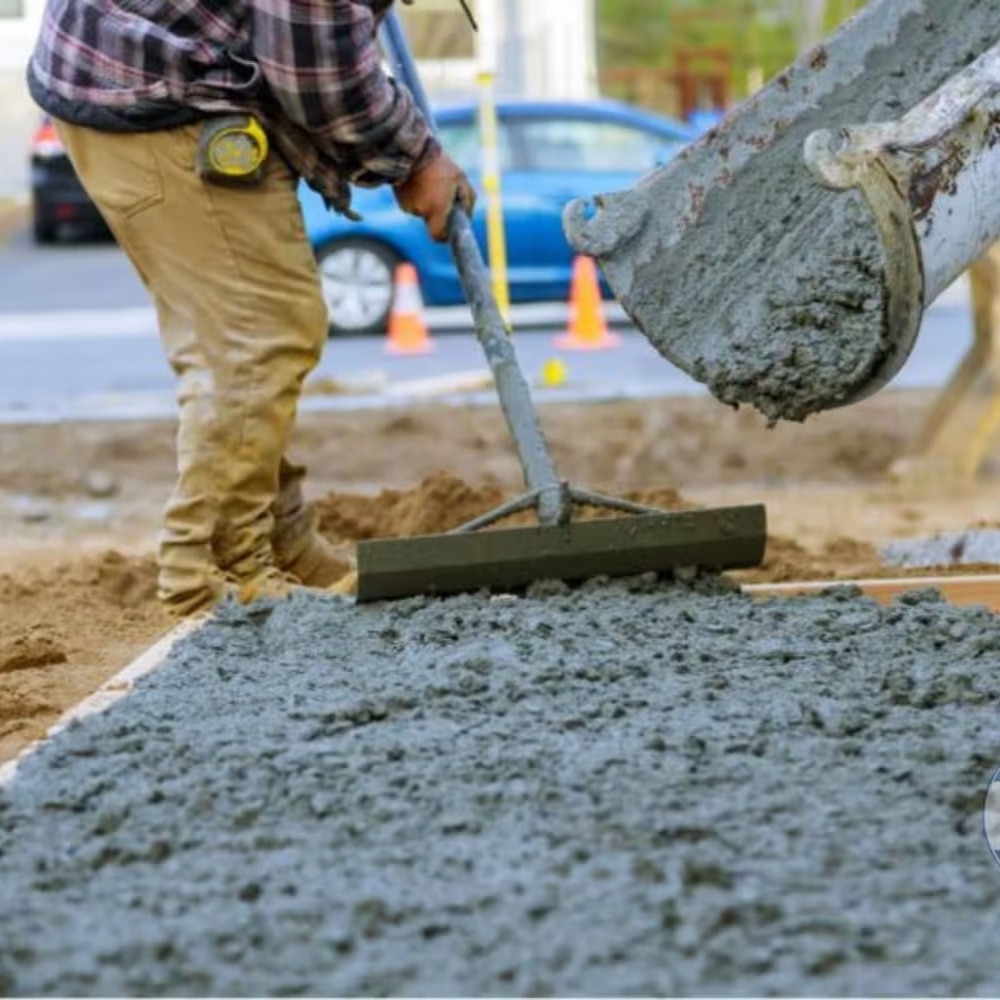
Place, compact and finish in accordance with good concreting practice. Curing is not a finishing formality with this product; it is the condition its performance depends on. The reduced water content that delivers strength and density also leaves less free moisture available at the surface, so begin curing immediately after finishing and maintain it properly.

6. Site Precautions:

Duconmix WR SP 300 is compatible with all types of cement. Where supplementary cementitious materials such as fly ash, GGBS or silica fume are in the mix, or where other chemical admixtures are being used alongside it, run trial mixes first to verify compatibility and performance. Wear suitable PPE, avoid contact with eyes and skin, and do not ingest.

Properties: ASTM C494 Type F Superplasticizer Admixture

Water-reducing Concrete admixture
Ducon Tile Adhesive
sqr012-col2

Key Features:

Benefits: Duconmix WR SP 300

At the batching plant: up to 35% water reduction means the target grade can be reached with less cement per cubic metre, and cement is the most expensive ingredient in any mix design. For a precast operation the arithmetic is more direct still, since a faster curing cycle means more bed turnarounds per week from the same moulds and the same floor area. Procurement teams comparing the water reducing superplasticizer price in Bangladesh across suppliers consistently find that cost per cubic metre placed, rather than the superplasticizer admixture rate per kg Bangladesh distributors quote, is the figure that actually decides a tender.

During placement: rheoplastic, cohesive concrete travels through congested reinforcement and complex formwork profiles without segregating or honeycombing. Reduced bleeding keeps the mix stable during compaction, and the improved surface finish cuts patching and rendering hours on faces that will be seen in the finished structure. On self-compacting mixes the required flow is achieved without the water content that would otherwise wreck the cube result.

Over the structure's service life: permeability, not compressive strength, is what governs how long reinforced concrete lasts. A lower water/binder ratio produces a denser matrix that restricts chloride ingress and sulphate attack, and the chloride-free formulation means the admixture itself adds no corrosion risk. In coastal and riverine conditions, in water-retaining structures, and in anything carrying traffic loads, that difference decides whether intervention comes at year fifteen or year forty.

Water-reducing Concrete admixture
Ducon Tile Adhesive
sqr012-col2
Water-reducing Concrete admixture
Ducon Tile Adhesive
sqr012-col2

Duconmix WR SP 300 : Usages Area

Applications & Use Cases

01

Precast Concrete Manufacturing

The most demanding application and the one where the economics are clearest. Precast yards need mixes that fill intricate moulds completely and release a clean, consistent face, and they need the unit to reach handling strength quickly enough to keep the bed cycling. Up to 35% water reduction delivers both from the same dose, without the extra water that would otherwise blemish the finish and slow the cycle.

02

Self-Compacting Concrete (SCC)

SCC asks for flow without water, which is precisely the trade-off PCE chemistry exists to resolve. Duconmix WR SP 300 produces the filling ability and passing ability an SCC mix requires while resisting segregation and bleeding, so the concrete stays homogeneous from the discharge point to the furthest corner of the formwork.

03

High-Strength Concrete

Grades above C40 are governed by the water/binder ratio, and below a certain ratio a conventional mix simply cannot be placed. This is where a Type F high range water reducer stops being an optimisation and becomes a requirement: it is the component that makes the specified ratio physically workable on site.

04

Industrial Floor Slabs & Warehouse Decks

Large-area power-floated slabs need a mix that finishes flat and dense, and that resists the abrasion of forklift and pallet-truck traffic. Reduced water content lowers drying shrinkage, which means fewer curling problems at joints and fewer cracks appearing across a slab that has to stay serviceable for decades.

05

Commercial Podium Decks & Transfer Slabs

Deep structural elements on fixed handover dates. Low permeability protects the deck and everything below it, while a dense, well-compacted section placed through heavy reinforcement gives the cover zone the integrity it needs. Earlier access releases the crane and the working area for the trades that follow.

06

Congested Reinforcement & Architectural Formwork

Dense rebar cages, couplers and tight cover zones are where poor workability becomes honeycombing and voids hidden behind the face. Rheoplastic flow carries concrete into intricate profiles with less vibration, producing clean arrises and a sound, continuous cover layer over the steel.

07

Residential Structural Frames

Columns, beams and roof slabs on apartment projects, where the practical problem is almost always too much water added at the mixer to make placement easier. Specifying a water reducing superplasticizer admixture Bangladesh contractors can dose consistently removes the incentive to add that water, and the resulting concrete is stronger, denser and less prone to shrinkage cracking than the same mix would otherwise have been.

08

Marine, Riverine & Water-Retaining Structures

Jetties, embankment works, water tanks and treatment structures fail through permeability rather than through lack of strength. A low water/binder ratio gives the dense matrix these environments demand, and the chloride-free formulation matters more here than anywhere else, since the surrounding environment is already supplying chloride.

09

Infrastructure & Fast-Track Structural Programmes

Bridge elements, flyover components and large civil works where batch-to-batch consistency and documented standard conformity are non-negotiable. Consulting engineers and government procurement teams routinely require ASTM C494 and IS 9103 compliance documentation before an admixture is approved for structural use, and that documentation is issued with every consignment.

Quality Assurance & Compliance

ASTM C494 Type F

Quality Certified

TDS & MSDS

Available on request

Laboratory Tested

Quality Verified Products

Bulk & Export

Factory-direct dispatch

Frequently Asked Questions

A high range water reducing superplasticizer is an admixture that lets concrete reach the same workability with substantially less water. The difference from a normal water reducer is one of degree: a conventional plasticiser achieves roughly 5% to 10% water reduction, while a high range product classified under ASTM C494 Type F achieves considerably more. Duconmix WR SP 300 delivers up to 35%. In practice a normal water reducer is adequate for routine structural concrete, while a Type F high range water reducer is what you specify when the mix must remain genuinely fluid at a low water/binder ratio.

Duconmix WR SP 300 is dosed at 0.3% to 1.5% by weight of cement, which is approximately 150 g to 750 g per 50 kg bag. Establish your working figure through a trial mix rather than assuming a fixed rate, because cement source, aggregate grading and ambient temperature all change the response. The product is supplied ready for use and should never be diluted before dosing.

Add it together with the mixing water, once roughly 50% to 70% of that water is already in the batch, then continue mixing for at least 60 seconds. Do not dose it onto dry cement or dry aggregate. This is the most common site error with PCE admixtures and the usual explanation when slump varies between batches that were otherwise identical.

Yes. Duconmix WR SP 300 is chloride-free, so it introduces no corrosion risk to embedded reinforcement or prestressing strand. This matters particularly in coastal and riverine locations across Bangladesh, where the surrounding environment already supplies chloride and the admixture should not be adding to the load.

Overdosing a high range water reducer typically causes retardation of set, increased air entrainment, and workability beyond what the mix can hold, which shows up as bleeding or segregation. None of that is hazardous, but all of it disrupts the pour programme and can compromise the finish. Do not increase dosage without technical approval; contact our technical team rather than adjusting it on site.

In the great majority of cases the mix design was correct and the water added at the mixer was not. Every additional litre raises the water/binder ratio, and that ratio is the single strongest control on final strength. The reason to specify an admixture for low water cement ratio concrete is that it removes the reason anyone reaches for the hose in the first place: the concrete is already placeable at the design water content.

Pricing is quoted against pack size and order volume rather than published as a single list rate, because consumption per cubic metre varies with the grade being targeted and the dosage band is wide. Send us your target grade, cement source, workability requirement and pour conditions and our commercial team will return a factory-direct quotation with a recommended dosage window. When comparing suppliers, compare cost per cubic metre placed rather than unit price: a more efficient admixture at a higher rate per kilogram is frequently cheaper in the mix.

Choose by the problem you are solving. Duconmix WR SP 300 is the maximum water reduction product, for low water/binder ratio, precast and self-compacting work. Duconmix WPR 700 is a water-reducing admixture with a waterproofing action, suited to basements and water-retaining structures. Duconmix RSP 600 and the RSP PCE grades are retarding superplasticizers, for long ready-mix hauls and extended placement windows in hot weather. Duconmix ES PCE 860 is the early setting grade, for fast formwork cycles. If you are unsure which applies to your pour, send us the mix design and we will advise.