Duconmix PCE Pink

PCE Based Admixture in Bangladesh

Duconmix PCE Pink is a chloride-free, high-range water-reducing superplasticizer manufactured by Ducon Construction Chemicals Industries Ltd at our Gazipur facility. It is built on modified polycarboxylate ether technology and formulated for concrete that has to be pumped, placed through dense reinforcement, or poured in large continuous volumes. The TDS figure is up to 30% water reduction, and the product complies with ASTM C494 Type F and EN 934-2.

Pack Size:

Various pack sizes available

Consumption:

0.4% to 1.6% by weight of cement
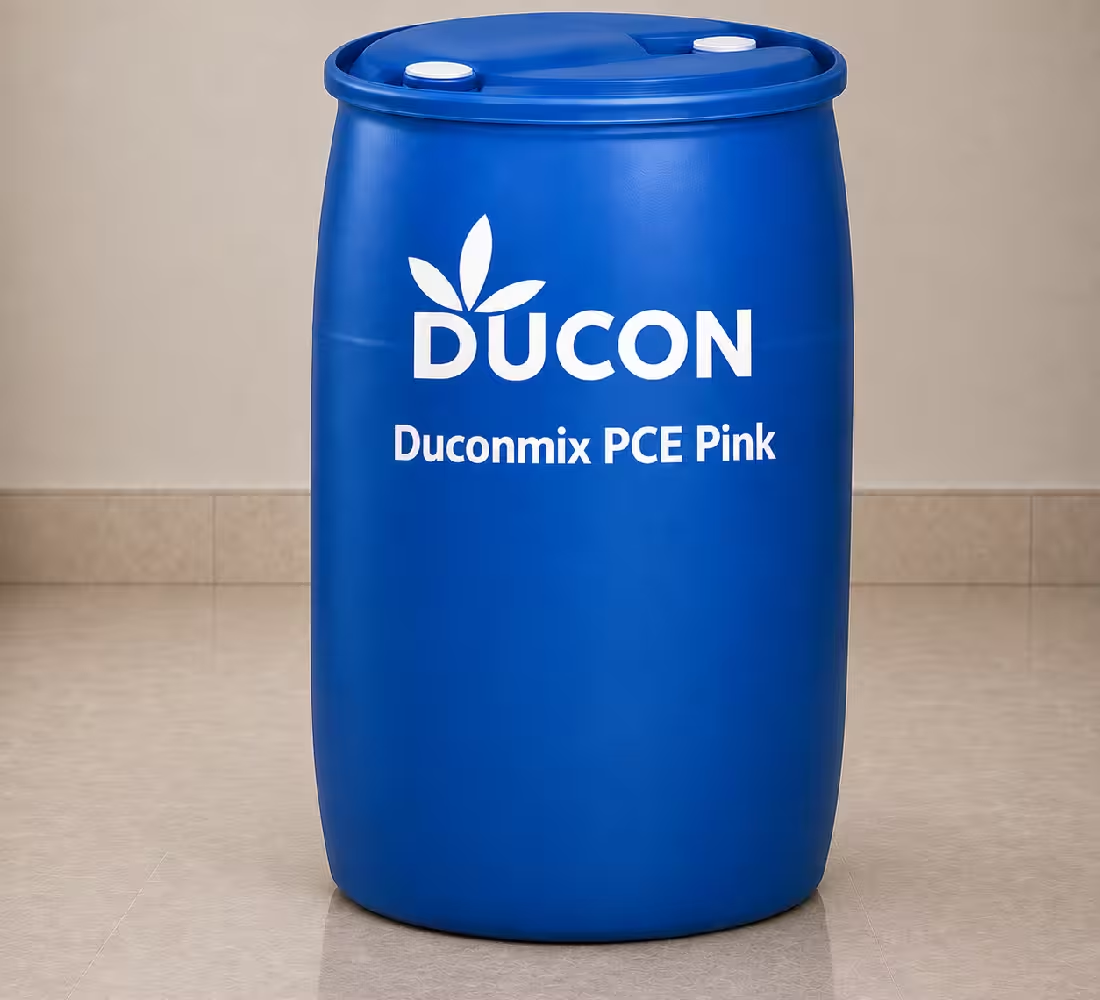
Duconmix PCE Pink – PCE-Based Admixture in Bangladesh
Ducon Tile Adhesive
sqr012-col2

What is Duconmix PCE Pink?

Ask any site engineer running a tower block in Dhaka what stops a pour, and pumping will come up before anything else. The boom is set, the crew is waiting on the fourteenth floor, and the line packs solid somewhere in the vertical run. Now the pipe has to come apart and be cleaned by hand while the rest of the load stiffens in the truck. Everyone knows what happens next: someone puts water in the hopper to loosen the mix and get it moving again. It works. It also quietly costs the pour a grade.

Duconmix PCE Pink was formulated for that specific problem. It is a polycarboxylate admixture, which means the polymer physically holds cement grains apart instead of relying only on electrical charge to separate them. The practical effect is a mix that stays fluid and cohesive at a much lower water content, so it travels through a long pipe run without the paste and the aggregate parting company. Segregation is what actually blocks a line. Keep the concrete cohesive and the blockage usually does not happen.

Water-reducing Concrete admixture
sqr012-col2
Ducon Tile Adhesive

Application Process

1. Dosing:

Dose Duconmix PCE Pink at 0.4% to 1.6% by weight of cement. On a 50 kg bag that is roughly 200 g to 800 g. The band is wide because the right figure depends on your cement source, your sand fineness, the aggregate grading and the pumping distance involved, so fix it by laboratory or site trial mix rather than by rule of thumb. Only trained personnel should add it. The product arrives ready to use and must never be diluted before dosing.

2. Timing:

Add the admixture with the mixing water, once roughly 50% to 70% of that water is already in the drum. Do not put it onto dry cement or dry aggregate. If it lands on dry material it adsorbs onto whatever it touches first and disperses unevenly, which is the usual reason two batches from the same mix design come out with different slump for no visible cause.

3. Mixing:

Keep mixing for at least 60 seconds after the admixture goes in, so the batch is uniform before it leaves the plant. Check slump or flow against your approved trial mix at that point. Polycarboxylate admixtures take a short time to reach full effect, so an operator who judges workability immediately after dosing may think the mix is stiffer than it will be and add water that was never needed.

4. Water-cement ratio:

Decide in advance whether the water saving is coming out of the mix or going into the slump, and tell the batching plant which. This is the decision that determines whether you get anything for your money. Released as extra flow, the 30% water reduction gives you an easy pour and no strength benefit. Held back, it lowers the water-cement ratio, and the concrete comes out denser, less permeable and stronger at every age.

5. Placing and curing:

Place, compact and finish to good concreting practice, then cure properly. Curing is not a finishing detail on a low-water mix. There is less free moisture near the surface to begin with, so early drying does more damage than it would to a wetter concrete. Start curing as soon as the surface will take it and keep it up, especially through the hot months when a slab can lose surface moisture faster than the crew can cover it.

6. Site Precautions:

Duconmix PCE Pink is compatible with ordinary Portland cement and with supplementary cementitious materials including fly ash, GGBS, silica fume and metakaolin. Where other chemical admixtures are going into the same mix, run trial mixes first to confirm compatibility and performance. Handle with suitable PPE, keep it off skin and out of eyes, and do not ingest it. Store in sealed original containers and read the safety data sheet before use. Shelf life is 12 months.

Polycarboxylate Ether Superplasticizer for Pumped and Mass Concrete

Concrete Admixture Duconmix RSP PCE
Ducon Tile Adhesive
sqr012-col2

Key Features: Duconmix PCE Pink

Benefits: Duconmix PCE Pink

At the batching plant: reducing water by up to 30% lets you hit the specified grade with less cement per cubic metre, and cement is the largest single cost in almost any mix design. Fewer blocked lines also means fewer part-loads sitting in a truck going off while a pipe is cleaned, which is a real waste that rarely shows up in anyone's cost sheet. Procurement teams checking the PCE admixture price in Bangladesh across several suppliers tend to find the useful comparison is cost per cubic metre placed rather than the PCE admixture cost per kg on the quotation.

During placement: the concrete stays cohesive while it moves, so it can be pumped a long way and still arrive as concrete rather than as separated paste and stone. Reduced bleeding means less water rising to the surface of a slab and less of the weak, dusty layer that comes with it. The finish off the form is cleaner, so there is less rendering and patching to do afterwards on anything that will be seen.

Over the structure's service life: permeability decides how long reinforced concrete lasts, more than compressive strength does. Lower water content gives a tighter matrix that resists chloride ingress and sulphate attack, and the chloride-free formulation means the admixture is not adding to the chloride load itself. On a building near the coast, or a water-retaining structure, that is the difference between repairs starting at year fifteen and starting at year forty.

Water-reducing Concrete admixture
Ducon Tile Adhesive
sqr012-col2
Water-reducing Concrete admixture
Ducon Tile Adhesive
sqr012-col2

Duconmix PCE Pink: Usages Area

Applications & Use Cases

01

High-Rise Residential & Commercial Towers

The application this product suits best. Above roughly eight or ten storeys, concrete is going up a pipe, and the mix has to survive the friction of the whole run plus the vertical lift without stiffening or separating. Specified as a concrete admixture for high rise building work, Duconmix PCE Pink gives the crew flowable concrete at the placing end without anyone adding water at the hopper to make the pump's job easier.

02

Pumped Concrete on Constrained Urban Sites

Most sites in Dhaka have no room to move a truck close to the pour, so the pump does the work and the pipe run is longer than anyone would choose. A cohesive mix that resists segregation under pressure is what keeps that line clear. Contractors who specify a high rise concrete pumping admixture at the mix design stage generally lose fewer part-loads and spend fewer hours breaking pipe apart in the middle of a pour.

03

Transfer Slabs & Deep Structural Elements

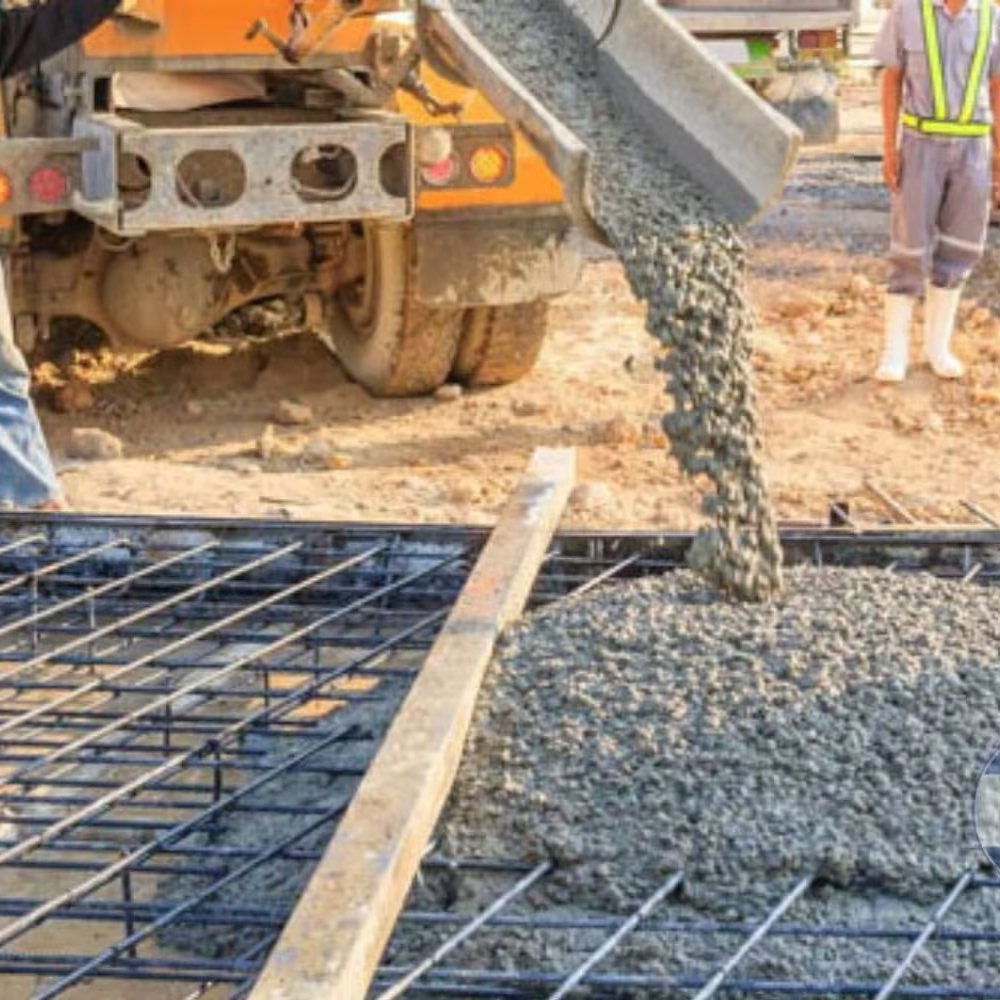
Thick, heavily reinforced sections carrying load from the structure above. The steel is dense enough that a stiff mix will bridge across the bars and leave voids under them. A rheoplastic mix travels into those spaces with less vibration and gives a continuous cover layer over the steel, which is what protects it.

04

Raft Foundations & Pile Caps

Large continuous pours where the concrete has to stay workable from the first truck to the last, sometimes over many hours. As an admixture for mass concrete pour work, this product holds workability while allowing a reduced water content, which limits drying shrinkage in a thick section and reduces the heat the pour generates as the cement hydrates.

05

Self-Compacting Concrete

SCC needs flow without the water that would normally produce it. Duconmix PCE Pink provides the filling and passing ability an SCC mix requires while resisting segregation, so the concrete stays uniform from the discharge point to the far corner of the form.

06

Commercial Podium Decks

Deck slabs and basement structures where low permeability protects everything below, and where the programme rarely allows a second attempt at a pour. Used as a high rise structural concrete chemical on the podium and lower levels of a tower, it gives the density these elements need while remaining placeable through congested reinforcement.

07

Bridge, Flyover & Infrastructure Elements

Civil works where batch-to-batch consistency and documented conformity are conditions of approval rather than preferences. Consulting engineers and government procurement teams routinely ask for ASTM C494 documentation before an admixture is accepted for structural use, and it is supplied with every consignment.

08

Residential Structural Frames

Columns, beams and roof slabs on apartment projects, where the real problem is almost always the extra water added at the mixer to make placement easier. A properly dosed admixture removes the reason to reach for the hose, and the concrete that results is denser and less prone to shrinkage cracking than the same mix would otherwise have been.

09

Industrial Floor Slabs & Warehouse Decks

Large power-floated bays that have to finish flat and take forklift traffic for years. Cutting water content reduces drying shrinkage, which shows up as fewer cracks across the bay and less curling at the joints. The improved surface finish also helps where the slab is the wearing surface.

Quality Assurance & Compliance

ASTM C494 Type F

Quality Certified

TDS & MSDS

Available on request

Laboratory Tested

Quality Verified Products

Bulk & Export

Factory-direct dispatch

Frequently Asked Questions

A line blocks when the concrete stops moving as one cohesive plug and starts separating, so the aggregate jams while the paste carries on. The usual causes are a mix that is too stiff, one with too little fine material to lubricate the pipe wall, or one that segregates under pressure. Adding water at the hopper appears to fix it and makes the underlying problem worse. A concrete admixture for pumped concrete addresses the actual cause: Duconmix PCE Pink produces a fluid, cohesive mix at reduced water content and limits segregation, which is what holds the plug together in the pipe.

Duconmix PCE Pink is dosed at 0.4% to 1.6% by weight of cement, which is roughly 200 g to 800 g per 50 kg bag. Set your working figure by trial mix rather than assuming a number, because cement source, sand fineness, aggregate grading and pumping distance all change what you need. The product is supplied ready for use and must not be diluted.

That is bleeding. The mix holds more water than the cement can chemically use, so the excess migrates upward as the solids settle out. It leaves a weak, dusty surface layer and raises the risk of plastic settlement cracking over the top bars. Working the surface harder does not fix it. Reducing the water does, and the TDS lists reduced segregation and bleeding among this product's benefits.

PCE stands for polycarboxylate ether, the chemistry behind modern high-range water reducers. The polymer holds cement particles apart physically, releasing water that would otherwise sit trapped between them, so the same mix flows at a lower water content. The type matters because the lignosulphonate and naphthalene admixtures still widely sold in this market achieve far less water reduction and often retard the set or entrain air while doing it. Duconmix PCE Pink is a chloride-free PCE based admixture in Bangladesh manufactured to ASTM C494 Type F, with water reduction of up to 30%.

It needs concrete that stays workable across a pour lasting many hours, and it benefits from a reduced water content, which limits both drying shrinkage and the heat generated as the cement hydrates in a thick section. Mass concrete is named in this product's technical data sheet for that reason. Anyone specifying a large volume concrete pour admixture should send us the section dimensions, the planned pour rate and the mix design, and our technical team will advise on dosage.

It needs one that keeps the concrete workable for the duration of a continuous pour and that lets you reduce water content, which limits both drying shrinkage and the heat generated as the cement hydrates. Mass concrete is named in this product's technical data sheet as a recommended use for exactly that reason. For very large pours, send us the section dimensions and pour rate along with your mix design and our technical team will advise on dosage.